Sunday, February 27, 2011

The USFL and Its Impact on the NFL

The United States Football League operated from 1983 to 1987.  While the league did not last long, it did spur the careers of some notable players including some from my favorite team, the Bills:

Jim Kelly
Kent Hull
Scott Norwood
Ray Bentley
Doug Flutie
Marv Levy

Other notable players included Steve Young, Reggie White, Doug Williams, Bart Oates and Gary Zimmerman among others.  What is of note is that a lot of these players made significant contributions to their respective NFL teams over the course of their careers.  Without them, it is probably safe to say that their teams would not have been as successful as they were.  Kelly, Hull, and Levy were major parts of the Bills success in the late 80s and early 90s and the main reason they went to four Super Bowls. Without them, the Bills may still have been a moribund franchise that might not even had stayed in Buffalo.  Flutie was a part of a Bills revitalization in the post-Kelly years as he led the Bills to the playoffs in 1998 and part of the reason the team was able to stay in Buffalo.

Reggie White is one of the all-time sack leaders who had success with the Eagles and Packers and won a Super Bowl with Green Bay in 1997.  Steve Young led the 49ers to their first Super Bowl win in the post-Montana era in 1995.  Doug Williams was the first black quarterback to win a Super Bowl.  Bart Oates was part of a Giants and 49ers offensive line that won three Super Bowls. Gary Zimmerman was a seven-time Pro Bowler and eight-time All-Pro who played for both the Vikings and Bronco and won a Super Bowl with Denver in 1997.

What if the USFL never folded or never existed and the players still were in the league or never played in the NFL?  I think it is quite obvious that their respective teams would not have been as successful without them.  Kelly’s time in particular in the USFL actually benefitted him as he was able to gain valuable experience that helped him in his Bills career.  While the USFL did not last, the players mentioned above and others used that short period of time to find long-term success.

Sunday, February 6, 2011

The Ramifications of an NFL Lockout


The Super Bowl is the culmination of a long journey for two NFL teams with one being crowned the winner.  It might possibly be the last NFL game that fans will see for a while.  There is still the looming possibility that a lockout will occur on March 4 if an agreement can not be reached between the owners and the players.

The NFL has not had any labor related work stoppages since 1987 which is longer than MLB, the NBA, and the NHL.   There were two strikes in the 1980s, one in 1982 and in 1987.  The ‘82 strike lasted 57 days and reduced the season to nine games.  The main issue was gross revenues. The player’s association wanted the players to get 55% of the gross revenues. They ended up accepting a one time $60 million payment to return along with upgraded minimum salaries and enhanced benefits.  The 1987 strike only cancelled one game and replacement players were used for three weeks.  The main issue in this strike was free agency.  While free agency was not granted, eventually it came about in 1993 as a result of an anti-trust lawsuit.

The current collective bargaining agreement was supposed to expire at the end of the 2012 season but in 2008 the owners opted out two years early.  The 2010 season did not have a salary cap.  The main topics this time around are extra regular season games (adding two more), player insurance, limits on rookie salaries, revenue division, and benefits for retired players.  Losses could reach $1 billion dollars with no agreement by September.

This could be potentially disastrous for the NFL.  The longer that this lockout drags on affects many different things.  Free Agency, offseason workouts (held at training facilities), the subsequent signing of drafted players, mini-camps, training camps, preseason, and regular season games would all be affected. Any of these being delayed would hamper the start of the 2011 season if one in fact would take place.  Some think there may not be a 2011 season.  The NFL has enjoyed tremendous success over the last few years and remains the most popular sport. A lockout would severely damage its image and I believe may have an affect much like with baseball following its strike in 1994. It took a few years to get fans back in the game with some not going back at all.  If the NFL wants to save the sport, it needs to come to some sort of agreement with the players. Better sooner rather than later.

Thursday, January 20, 2011

What If......

Continuing with the What If.. series I look at the 1995 AFC Championship game that pitted the Indianapolis Colts against the Pittsburgh Steelers. 

Years before Peyton Manning led the Colts to a Super Bowl win following the 2006 season, Indianapolis made an improbable run in 1995 that almost led them to the Super Bowl.  The team was led by Jim Harbaugh who quarterbacked the Colts to a 9-7 record and a wild card berth.  They beat the San Diego Chargers 35-20 in the Wild Card round for their first playoff win in 24 years and their first since moving to Indy in 1984.  The next week, the Colts beat the #1 seeded Kansas City Chiefs 10-7.  It set up a match-up with the Pittsburgh Steelers.  The year before, the Steelers were upset by the Chargers in the AFC Championship game. 

Harbaugh earned the nickname "Captain Comeback" and nearly led the Colts to victory in this game.  With the ball on the Steelers 29 yard line and Indy down 20-16 with five seconds left in the fourth quarter, Harbaugh threw a Hail Mary pass and the ball came down in a crowd of players in the end zone.  Wide receiver Aaron Bailey had the ball on his chest briefly but the ball fell to the turf and the game was over. 

The Colts were the first #5 seed to advance to the conference title game since the 1990 playoff expansion.  To think that Jim Harbaugh and not Peyton Manning could have led the Colts to the Super Bowl (and maybe even won it).

Thursday, January 6, 2011

What if........

Continuing in the series of What if moments takes us to January 8, 2000. Bills and Titans in the AFC Wildcard playoff game.  The Homerun Throwback or Music City Miracle as it is called.  The Bills take a 22-16 late in the fourth quarter and seemingly have the game won. Kicker Steve Christie kicks a short kick and Lorenzo Neal fields the ball. He then hands off to Frank Wychek who then passes the ball across the field to Kevin Dyson who then races 75 yards for the winning touchdown.  The play is reviewed and eventually upheld.  The Titans win the game and subsequently go all the way to the Super Bowl.

The question remains that if the Bills win that game then the Titans don't go on to their miracle run to the Super Bowl.  Some thought the Bills could have gone to the Super Bowl that year. They had a defense that only allowed 229 points (14.3/game) that was second in the league.  A Rams-Bills Super Bowl would have been interesting.  Since then however, the Bills have not made it to the playoffs. 

In that Rams-Titans Super Bowl, if Dyson scores on the final play of the game and is not tackled by Mike Jones of the Rams, that game goes into overtime where either the Rams eventually win or the Titans cap off their Cinderella season with a Super Bowl victory and Kurt Warner never becomes a hero.

Again you wonder, What if..............

Wednesday, December 15, 2010

What if........


This will be the first in a series of "What If" postings.  It will examine dramatic events in sports history and how it changed a team's and player's fortunes forever. The first posting will examine Kurt Warner and Tom Brady's rise to prominence.

August 23, 1999 and September 23, 2001 are two dates that are forever etched in NFL history.  No one knew at the time what would unfold from that point forward.

August 23, 1999.  Rams and Chargers.  Third preseason game. Quarterback Trent Green of the Rams suffers a season ending knee injury.  The Rams turn to unknown Kurt Warner.  The man who previously was stocking shelves and played in the Arena League and NFL Europe, led the Rams all the way to the Super Bowl where they defeated the Tennessee Titans 23-16.  Warner was the MVP of that game and won the NFL MVP award twice.  He would take the Rams to another Super Bowl as well as the Arizona Cardinals.  Green eventually left for Kansas City and enjoyed six decent seasons but not the same success as Warner.

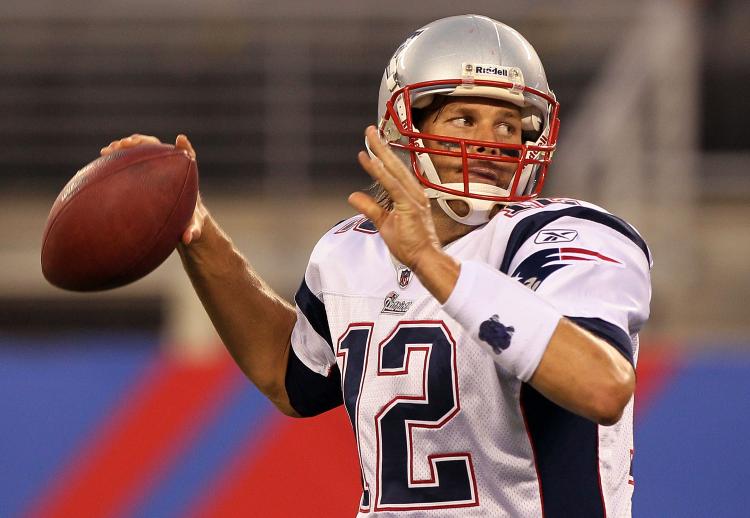
September 23, 2001.  Jets and Patriots.  Week 2.  Patriots quarterback Drew Bledsoe is hit by Jets linebacker Mo Lewis on a run.  Bledsoe shears a blood vessel in his chest as a result and is replaced by Tom Brady.  Brady played so well, he remained the starter and led the team to their first Super Bowl win (although Bledsoe did lead the Pats to victory over the Pittsburgh Steelers in the AFC Championship game when Brady left with an injury).  Bledsoe was eventually traded to the Buffalo Bills.  Brady would go on to win two more Super Bowls and win two MVPs along with other accolades.

Two dramatic events that forever changed NFL history.  No doubt that if Green and Bledsoe were not injured, that the Rams and Patriots would not have won any Super Bowls (and in the Patriots case start a dynasty of sorts).

Wednesday, November 10, 2010

Loyalty

In today's sports, players don't spend their whole careers with one team.  Free agency has greatly altered that and even certain players are not prone to being traded.  A lot of people wear their favorite player's jersey.  Are we showing fan loyalty to the team or to the player or both?  Some people do follow certain players and may wear their jersey or collect their card.  For me, it depends on how that player left the team. The team may want them but the player chooses to go elsewhere.  The team may choose not to sign them and the player goes elsewhere.  The team may also just trade the player away.  I have always put team above the player.  No one player is greater than the team. If a player hits free agency and turns down the current teams offer for a better deal, I consider them a traitor and they are "dead" to me.  With that said if my team signs a player from the outside, I welcome them with open arms even if if is from a rival.

For me it depends on the circumstances but ultimately my team is always first for me and I never abandon them no matter who they let go. 

Sunday, October 31, 2010

Are the Los Angeles Angels the Yankees of the West?

A few years ago Los Angeles Angels owner Arte Moreno was quoted as saying that he would like to make the Angels the “Yankees of the West.”  What did he really mean by that?  Was it to more financially like them or market the team like they do?  The Angels have one of the largest payrolls in baseball and have marketed themselves in the Los Angeles area.  The on-field product?  There is no doubt that the team has been successful on the field in winning the AL West five of the last six seasons.  The results?  The Angels have only advanced to the ALCS twice (2005 and 2009).  The Yankees only missed the playoffs once in the past decade (2008) yet appeared in four World Series winning twice (counting the 2000 win and 2009).

The Yankees have attracted top-tier free agents (CC Sabathia and Mark Teixeira), and second tier players (AJ Burnett and Nick Swisher).  The Angels have gotten Vladimir Guerrero, Bartolo Colon, Tori Hunter, Bobby Abreu, and Hideki Matsui to name a few.    The only major trade in the past decade was getting Teixeira in 2008 who ended up just being a rental player as he would sign with the Yankees in 2009.  The Angels did trade for Scott Kazmir in 2009 that at the time looked to work but has so far proven to be a bust. Similar to the Teixeira trade was the acquisition of Dan Haren and that could prove be in huge in the future.  With a somewhat depleted talent pool in the minors, any chance for another big trade seems remote for the time being.

So what is Arte trying to do? Is it just a money grab? Is he being cautious with the current economic situation? Moreno was quoted in early October saying that he is “committed to winning” and would spend whatever it took to get the team back to the playoffs. I say that if you want to be the Yankees (and beat them) you have to spend like them. Only then can you call yourselves the “Yankees of the West.”